Seattle Public Schools

Walk, Bike, and Roll

Get Involved

Get Involved


Find a Program

Find a walk or bike program in your neighborhood. Contact your Safe Routes to School Coordinator to connect with your school’s program or to add your program to our list. List updated: 12/9/2025.

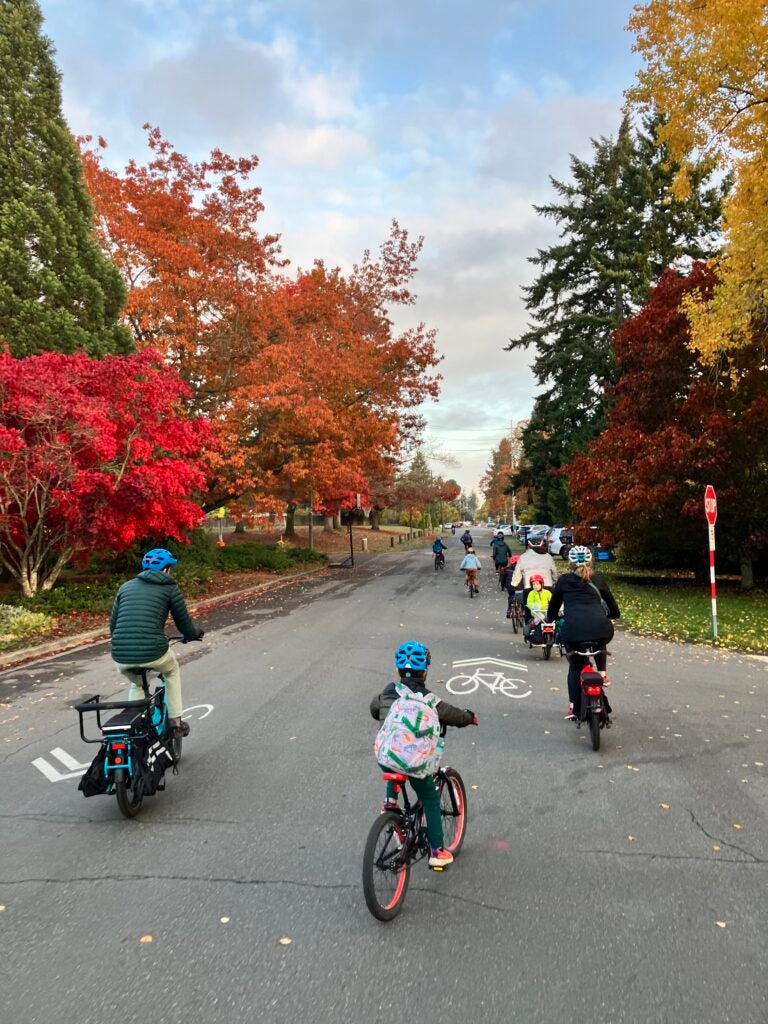
a group of students biking on the street

Walk

  • John Muir Elementary
  • Dunlap Elementary
  • Bailey Gatzert Elementary
  • Beacon Hill International School
  • Broadview-Thomson K-8
  • Sand Point Elementary
  • West Seattle Elementary
  • Wing Luke (on pause)
  • Roxhill (in development)
  • Concord International School (in development)

Bike

  • Viewlands Elementary
  • Dunlap Elementary
  • North Beach Elementary
  • James Baldwin Elementary
  • Maple Elementary
  • South Shore (on pause)


Start a Program

Walking School Buses and Bike Buses (or Bike Trains) are groups of students who walk or bike to school together, lead by adult leaders. Start a walk or bike bus program to help more students get to school on time and ready to learn, and make getting there more fun! Click below to learn about each type of program.

First, check with your neighbors and your school to see who is already walking to school – can you join them? If your school doesn’t have a walk group organized, follow the tips below to get started.

Safety

  • Choose a route and test it for safety: Look at your school’s walk and bike route map to help find the best route.
    • Ask yourself:
      • Which route stays off busy streets as much as possible?
      • Are there sidewalks or paths on busy streets?
      • Where is the best place to cross busy streets?
      • Where are adult crossing guards posted?
  • Safe street crossing education: Check out the Cascade Bicycle Club videos below to support you, other volunteers, and youth in crossing streets safely.
  • Pre-walk your route to look for hazards and check timing for each stop and arriving to school on time.

Coordination

  • Create a contact list with phone numbers and/or emails of interested volunteers and student caregivers. Choose a communication platform that works best for your group (email, WhatsApp, text) and start a group message for reminders, updates, and cancellations.
  • Decide how often you will walk together (everyday, once a week, once a month) and where and what time children will meet the “bus”?
    • What is your inclement weather policy?
    • What to do if the volunteer will be unable to lead the walking school bus on a particular day?
    • How long will you wait for late arrivals?
  • Spread the word at school using posters, flyers, etc. Reach out to parents who live along your route.

Supplies and Resources

  • Request a Walking School Bus package to equip your group with safety vests, lights, first aid kits, and flags.
    • Leaders Title 1 schools can potentially qualify for a stipend for each trip through an SDOT Mini Grant.
    • Once you have an established Walking School Bus route that meets regularly, SDOT can provide you with yard signs to post along your route and/or install colorful designs on the sidewalk along your route to school.

First, check with your neighbors and your school to see who is already biking to school – can you join them? If your school doesn’t have a bike group organized, follow the tips below to get started.

Learn the specifics of starting a Bike Train or Bike Bus to school from our partners at Cascade Bicycle Club. Find a Bike Bus Planning Guide on the National Walk and Bike to School Day webpage.

Get inspiration and advice from our neighbors in Portland: Bike Bus PDX.

Contact your Safe Routes Coordinator brnelson1@seattleschools.org for help getting started.

Safety

  • Choose a route and test it for safety. Look at your school’s walk and bike route map to help find the best route. Look for neighborhood greenways, healthy streets, bike trails, and bike lanes. Consider starting your route at a park or P-Patch for a protected area for youth to gather.
    • Pre-ride your route to look for hazards (car pull outs, and plan road crossing procedures at intersections).
      • Check timing for any stops you plan along the way to ensure timely arrival to school.
  • Biking skills and education: Organize a leader training and youth skills check before you start. Learn more from this Community Based Ride Leader Training, and the basics listed below.
    • Before each ride complete three safety checks for all riders:
    • Group Riding Basics:
      • Roles: It is recommended to have one adult rider for every 2-3 children.
        • Front and rear adult riders to make sure children are all ‘aboard’ together.
        • Middle adult riders help with corking (blocking cars at intersections so the group can roll through together).
      • Mechanics: maintain one bike-distance between each rider, ride single file, no swerving, use hand signals and voices to indicate turns, stops, and hazards.

Coordination

  • Create a contact list with phone numbers and/or emails of interested people. Choose a communication platform that works best for your group (email, WhatsApp, text) and start a group message for reminders, updates, and cancellations.
  • Decide how often you will roll together (everyday, once a week, once a month) and where and what time children will meet the bike bus/train?
    • What is your inclement weather policy?
    • What to do if a volunteer will be unable to lead on a particular day?
  • Spread the word at school using posters, flyers, etc. Reach out to parents who live along your route.

Supplies and Resources

  • Seattle Department of Transportation Supplies: Request a free Bus Bus package, encouragement supplies, or prizes to equip your group with helmets, lights, locks and other supplies.
    • Leaders at Tier 1 and Tier 2 equity schools can potentially qualify for a stipend for each trip through an SDOT Mini Grant.
    • Once you have an established Bike Bus route that meets regularly, SDOT can provide you with yard signs to post along your route and/or install colorful designs on the sidewalk along your route to school.
  • Organize a bike swap, bike drive, or repair party to support students in need of bikes or repairs.
  • Reach out to your coordinator brnelson1@seattleschools.org to bring awareness to your group’s specific supply and safety needs.

Do volunteers need to be registered with SPS?

Due to updated volunteer protocol beginning in the 25-26 school year, PTA led Walk and Bike to School volunteers do not need to be registered with SPS. Please contact you PTA for relevant PTA volunteer screening procedures.

School sponsored programs need volunteers registered with SPS. Check out the Volunteer Webpage and contact your school admin and your Safe Routes to School Coordinator, Brooke Nelson, for more information on the registration process.

What if I or my child can’t walk, bike, or roll all the way?
That’s okay! If you’re able, park your car a couple blocks away from school and walk in. (If you drive, please avoid driving along the route.) Busing is great too!

What can students do with their bikes during and after school?
Lock bikes at school racks or check with school staff to see if there is bike parking inside. Bikes are not allowed on school buses, but you can bring them on the Metro bus and light rail.

Volunteer Liability: The Volunteer Protection Act protects registered SPS volunteers from liability if they are volunteering with a walk, bike, and roll to school program, unless the volunteer acts with gross negligence (is extremely or deliberately harmful).


Recruit Volunteers

Need more volunteers to support your program?

  • Connect to your school community
    • Your Safe Routes Coordinator can deliver a presentation to your PTSA, School Building Safety Committee, or your staff.
    • Find your school’s Volunteer Liaison to send an email blast to all volunteers currently registered at your school.
  • Reach out to local organizations and community groups who have a stake in youth safety, environmental action, or transportation to request volunteer support and help getting the word out

Do volunteers need to be registered with SPS?

Due to updated volunteer protocol beginning in the 25-26 school year, PTA led Walk and Bike to School volunteers do not need to be registered with SPS. Please contact you PTA for relevant PTA volunteer screening procedures.

School sponsored programs need volunteers registered with SPS. Check out the Volunteer Webpage and contact your school admin and your Safe Routes to School Coordinator, Brooke Nelson, for more information on the registration process.


Transportation News

Graphic of a cloud with rain falling, there is an exclamation point in the cloud

Preparing for Winter Weather

Seattle Public Schools is actively monitoring weather forecasts and road conditions.
busses parked along the street

Update: First Student and Bus Drivers in Contract Negotiations

We want to provide an update on contract negotiations between one of our bus providers, First Student, and Teamsters 174, the union representing their

busses parked along the street

First Student and Bus Drivers in Contract Negotiations

One of Seattle Public Schools (SPS) contracted school bus providers, First Student, is currently in contract negotiations with Teamsters 174

New Program Coordinator for Safe Routes to Schools

Brooke Nelson, Program Coordinator for Safe Routes to Schools