
Student Meal Programs
Student Meals at SPS
What Does It Mean to Qualify for Free Meals Under USDA’s Offer vs. Serve (OVS) Program?
Under the National School Lunch Program, students qualify for free reimbursable meals based on federal income guidelines or schoolwide eligibility (like HB 1238). Here’s how it works with Offer vs. Serve (OVS):
- Free Meal Benefit:
- The first reimbursable breakfast and lunch each day are free for qualifying students.
- No cost to the student, but the meal must meet USDA requirements.
- Offer vs. Serve Rules (Min. 3 Components):
- Students must select at least 3 of 5 meal components (e.g., protein, grain, fruit, vegetable, milk).
- Example: A lunch with a sandwich (grain + protein), fruit, and milk qualifies as a free reimbursable meal.
- Extra Items = À La Carte:
- Additional servings or snacks (e.g., a second entrée, juice, or extra milk) are not free and will be charged separately.
Why It Matters: OVS reduces food waste while ensuring students receive nutritious meals. Even if your child’s school offers free meals to all (like HB 1238), completing a household application helps fund other critical programs!
Community Eligibility Provision – CEP
Seattle Public Schools has several schools that will offer free meals (breakfast and lunch) for all students. See a list of schools that will offer free meals for all students.
See the schoolsFood Programs
We offer a variety of food service programs to students throughout the school day. Click on a program below to learn more.
Who Should Apply for Free Student Meals?
You should complete the student free meals application if:
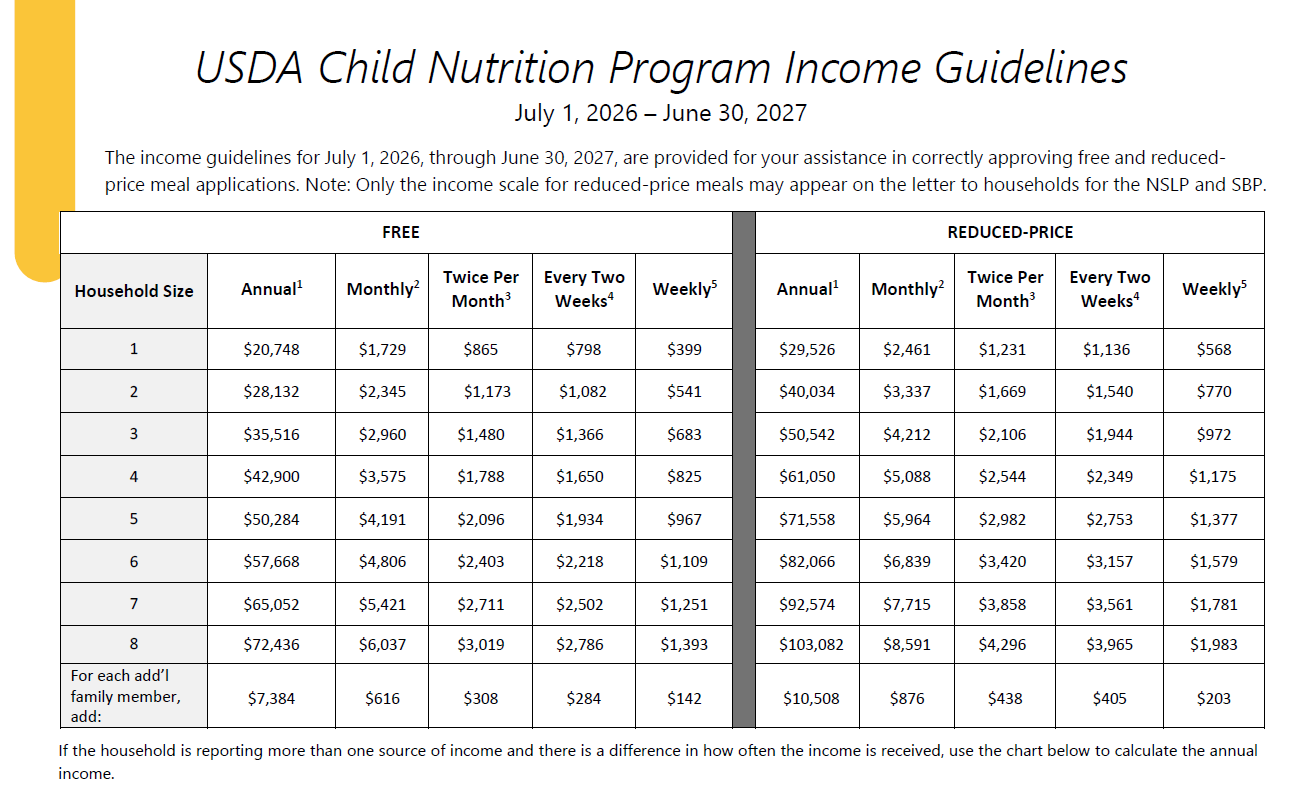
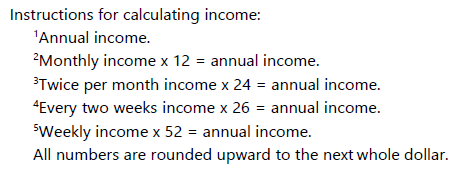
- Your household income is the SAME or LESS than the amount on the income chart below.
- You receive Basic Food.
- You take part in the Food Distribution Program on Indian Reservations (FDPIR).
- You receive Temporary Assistance for Needy Families (TANF).
- You are applying for a foster child.
Why Apply?
Students approved for free and reduced-price meals may also be eligible to receive reduced fees for the following programs:
- Event Fees
- Field Trips
- Running Start Books
- Associated Student Body (ASB) Fees
- Pre-College Exams (PSAT/SAT/ACT)
- College Application Fees
Income Chart
USDA Child Nutrition Program Income Guidelines
July 1, 2026 – June 30, 2027
How to Apply
We encourage all eligible families to submit a new application for school meals prior to the start of each new school year. However, applications are accepted anytime throughout the school year.
The application can be submitted online. Paper applications are also available below and at every school office and lunchroom.
For this school year, a universal form includes:
- Free and Reduced-Price Meal Application
- Family Income Survey